
Things to Do in Minsk in October
October weather, activities, events & insider tips
Low Season · Budget Friendly
October Weather in Minsk
Long-run averages for October
50°F (10°C)
High Temp
38°F (3°C)
Low Temp
2.2 inches (56 mm)
Rainfall
86%
Humidity
11
Rainy Days
2
Sunny-Day UV
⚠ Late October brings first ground frosts. Overnight and early morning are the risks. Park paths grow slippery. Cobblestones ice over. Bridge crossings above the Svislach River need caution. Frost lifts by mid-morning. Watch your footing around Trinity Suburb and the Upper Town before 10 AM. Stone surfaces hide ice.
⚠ Humidity stays high at 86%. The cold penetrates deeper than temperature indicates. Inadequate layers fail within minutes of stepping outside. The chill accumulates across a full walking day. Layer for conditions 5°C (9°F) colder than the forecast suggests. The damp finds every gap.
Is October Right for You?
Weigh the advantages and considerations before booking
Advantages
- + Early-to-mid October brings peak foliage to Minsk. Amber birch and rust-red maple transform the parks into corridors of color, paths carpeted in wet leaves. That northern European autumn sharpness hangs in the still air: cold earth, wood smoke. Chelyuskintsev Park and Loshitsa Estate are at their finest. You'll share them with pensioners and dog walkers. Nobody else.
- + Virtually zero tourist crowds at any attraction. October in Minsk means entire halls to yourself at the National Art Museum. Find seats at any restaurant without calling ahead. Stand alone before the Island of Tears memorial while the Svislach River reflects bare trees and grey sky. This European capital barely registers on tourist circuits in high summer. In October, it feels like yours.
- + The cultural season hits full stride by October. The Bolshoi Theatre of Belarus and the National Philharmonic offer ballet, opera, and orchestral programming that would cost five times as much in Vienna or Moscow. The neoclassical Bolshoi, rebuilt after the war with Soviet-scale ambition, remains a working theater. Not a tourist attraction that happens to stage shows. Worth it.
- + One of Europe's most affordable capitals becomes even cheaper in October. Accommodation rates drop from an already low summer baseline. Quieter streets translate to easier logistics across the board. October in Minsk delivers a genuine European capital experience. For a fraction of what the continent's western half charges year-round.
Considerations
- − Damp, penetrating cold that 86% humidity makes feel worse than the thermometer suggests. Mornings near 3°C (38°F) cut through inadequate layers within minutes. The persistent grey overcast can hold for days without breaking. This gives the city a weight that takes adjustment if you arrive from somewhere sunny. Pack rain gear.
- − Daylight shrinks to roughly 10.5 hours by late October. Functional darkness arrives by 5:30 PM. This compresses outdoor sightseeing into a tight midday window. Any afternoon park walk or architecture tour needs to start early. Plan indoor activities for the back half of each day.
- − Entry logistics remain more complex than most European destinations. Visa-free arrangements through Minsk National Airport exist for many nationalities. But conditions are specific. The broader geopolitical context has thinned direct flight routes. Connections through Istanbul, Dubai, or occasionally Warsaw are often the realistic options. Check current entry requirements well before booking.
Best Activities in October
Top things to do during your visit
Autumn Foliage Walks in Chelyuskintsev Park and Loshitsa Estate
October catches Minsk's parks at their most painterly. Chelyuskintsev Park, which backs onto the Botanical Garden near Ploshchad Peramogi, turns into a tunnel of gold-leafed birch and deep amber oak. Wet bark darkens against pale trunks in a way that photographs well even under flat overcast. Loshitsa Estate, further south along the Svislach River, is the less visited of the two. Arguably the finer walk. Its nineteenth-century manor house is framed by chestnuts dropping glossy brown fruit onto gravel paths. The air has that particular autumn bite. Cold enough to sting your nostrils, not yet winter-bitter. Notes of decaying leaves and damp soil. You'll share the benches with a handful of locals at most. Go in the morning when low light turns the canopy translucent. Or just after rain when the leaf-carpet gleams and the park smells of wet earth and woodsmoke drifting from somewhere you can't quite place.
Booking Tip: These walks are free and self-guided. Half the appeal. If you want historical context for Loshitsa Estate's manor and grounds, guided walking tours of Minsk's green spaces are available through licensed operators. See current options in the booking section below. Allow two to three hours per park to walk without rushing. Wear waterproof boots with real tread. Leaf-covered paths hide uneven ground and standing water.
Day Trip to Mir Castle and Nesvizh Palace
The two UNESCO-listed landmarks southwest of Minsk sit about 100 km (62 miles) from the city and roughly 30 km (19 miles) from each other. A natural pair for a full-day excursion. Mir Castle, a sixteenth-century fortress of rust-red brick with corner towers reflecting in its surrounding moat, looks dramatic against a grey October sky. The kind of low Belarusian overcast that erases the horizon line and makes the walls seem to float above the water. Nesvizh Palace, the Radziwill family's estate, is more refined. Formal gardens still hold amber and copper tones in early October. Interiors are heavy with dark wood, painted ceilings, and the faint mustiness of rooms furnished for centuries. The drive between them passes through flat farmland where the harvest is finishing. Stubble fields stretch to the treeline. Smoke from autumn clearing drifts low across the road. With summer visitors entirely absent, you might find yourself alone in an entire wing of Nesvizh. Hearing nothing but your own footsteps on parquet floors.
Booking Tip: Book a guided day trip through licensed operators at least a week ahead. October departures tend to run with smaller groups and may require minimum numbers. See current options in the booking section below. The round trip with both sites takes a full day, typically eight to ten hours including transport. Driving yourself is possible. Road signage outside Minsk is primarily in Belarusian and Russian. The castles are easier to appreciate with a guide who can unlock the Radziwill family history.
Independence Avenue Soviet Architecture Walk
Praspiekt Niezaliezhnasci runs roughly 15 km (9.3 miles) from Independence Square to the northeastern edge of the city. Walking even its central five-kilometre (3.1-mile) stretch in October delivers one of Europe's most concentrated lessons in Stalinist Empire architecture. You will not see another tourist. The buildings, raised in the late 1940s and 1950s from pale limestone, were designed to project Soviet confidence at a scale that still commands attention. Uniform cornice lines rise five storeys high. Arched entryways stand tall enough to drive a truck through. The whole ensemble is punctuated by October's bare-branched linden trees stripped down to their geometry. The central section between Ploshchad Niezaliezhnasci and Ploshchad Peramogi passes GUM department store. It passes the KGB headquarters still carrying its original Cyrillic acronym across the facade. It passes a sequence of Stalinist apartment blocks whose ground-floor arcades echo with footsteps in the cold air. October's low-angle sun, when it breaks through the overcast, throws long shadows across the wide pavements. Summer's overhead light never produces this effect. The chill keeps you moving at a pace that covers more ground than you'd expect.
Booking Tip: You can walk this independently. Guided architecture tours add context that transforms the experience from sightseeing into understanding. Licensed walking tour operators run English-language departures. Historians or architects often lead. See current options in the booking section below. Allow three to four hours for the central stretch. Pace yourself to stop and look up. You will want to do this repeatedly. Start mid-morning when the light is best. Finish before the 5:30 PM darkness closes in.
Performances at the Bolshoi Theatre of Belarus
By October the Bolshoi Theatre, the neoclassical white-columned building anchoring Ploshchad Paryzskay Kamuny, has its full season running. This is the strongest programming of the year. The company's ballet is trained in the Vaganova tradition. It performs at a level that would fill far more expensive halls elsewhere in Europe. The theater itself was rebuilt after wartime destruction. It has Soviet-era gilt trim, red velvet seats, and crystal chandeliers that scatter warm light across the auditorium. It smells faintly of old wood. It carries the particular warmth of a building that fills with bodies and music several nights a week. October repertoire typically leans classical. Expect Swan Lake and Giselle alongside contemporary Belarusian choreography. The roughly 1,100 seats rarely sell out except for weekend premieres. On a rainy October evening, darkness has fallen by half past five. The temperature outside sits near 5°C (41°F). Walking out of a ballet into the floodlit square with the chill hitting your flushed face is the kind of moment that tends to define a trip.
Booking Tip: Book online at least a week ahead for weekend performances and any premieres. These tend to cluster in October and November as the season builds. Weeknight shows are generally available with shorter notice. The theater's own website handles bookings. Seats throughout the hall offer decent sightlines given the relatively compact auditorium. Dress code is relaxed by Western European opera standards. Minsk audiences tend toward smart casual. You will feel out of place in hiking gear.
Belarusian Comfort Food and Komarovka Market
October is when Belarusian cooking stops being a curiosity and starts making complete sense. This is a cold-weather cuisine. It was built for exactly the kind of damp chill that settles over Minsk this month. Draniki, the crispy potato pancakes that arrive sizzling and glistening under a spoonful of thick sour cream, taste different when you've just walked in from 5°C (41°F) air. Your fingers are still numb. Machanka, a slow-cooked pork stew ladled over blinchiki with enough richness to fog your glasses, is comfort food in the most literal sense. Komarovka Market near Ploshchad Yakuba Kolasa is the place to absorb the raw ingredients. Find barrels of sauerkraut with their sharp fermented tang. Find forest mushrooms from October's first cold snaps laid out on newspaper. Find smoked salo sliced thick enough to see each striation of fat and lean. Find whole smoked fish hanging above the counter in rows. The market is busiest on Saturday and Sunday mornings before 9 AM when families shop for the week. The seasonal mushrooms and berries tend to sell out by midday. Surrounding streets fill with the smoky-sweet scent of roasting chestnuts from sidewalk vendors. They only appear once the temperature drops.
Booking Tip: Food-focused walking tours that include Komarovka Market and traditional restaurants are available through licensed operators. These tend to be the fastest way to navigate a menu where English is the exception. See current options in the booking section below. Book at least a few days ahead. October groups run small. If you go independently, point-and-order works at most market stalls. It works at older restaurants near the market where menus are Cyrillic-only. The vendors are patient if you're clearly trying.
Upper Town and Zybitskaya Street Evening Scene
Minsk's nightlife clusters along Zybitskaya Street and the surrounding lanes of the Upper Town, a compact district of restored eighteenth- and nineteenth-century buildings above the Svislach River near Trinity Suburb. October shifts the quarter's character noticeably. Outdoor terraces close or shrink behind glass windbreaks. The crowds thin to predominantly locals. Bars pivot from summer cocktails into dark spirits, local craft beer, and hot drinks that steam in the cold air. The stone-paved street gleams wet under vintage-style streetlamps on most October evenings. Walking between venues takes you past the amber-lit facades of Trinity Suburb reflected in the river. The distant silhouette of the National Library's diamond-shaped structure glows against the skyline. The sound shifts as you move. Muffled bass from one doorway gives way to conversation spilling out of another. The occasional clatter of glasses comes through an open service entrance. Minsk is not a late-night city by Western European standards. Things tend to quiet on weekdays by midnight. The concentration of bars on Zybitskaya means you can try four or five places in an evening without crossing a major road or hailing a cab.
Booking Tip: No advance booking needed for the bar scene itself. Just show up after 8 PM on a Friday or Saturday for the fullest atmosphere. Try a weekday evening if you prefer quieter conversations with locals. They are more likely to practice their English when the room isn't packed. Evening walking tours that include the Upper Town's history and end in the Zybitskaya quarter are available through licensed operators. See the booking section below for current options.
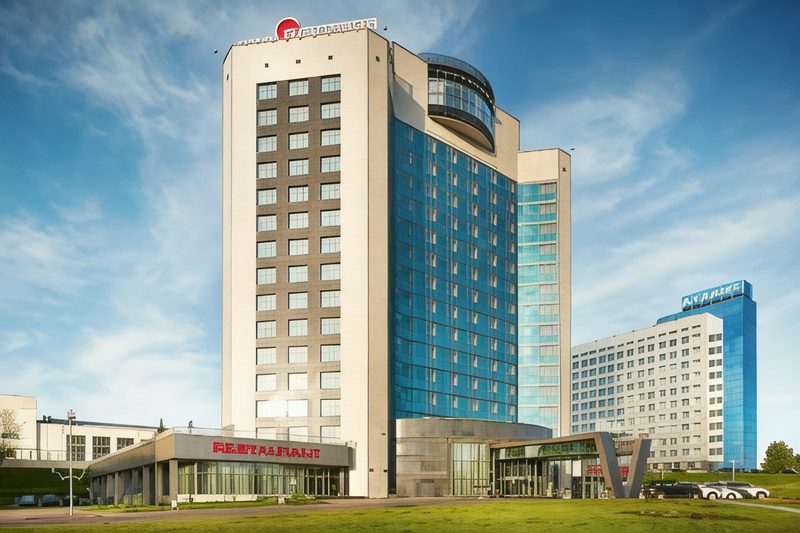
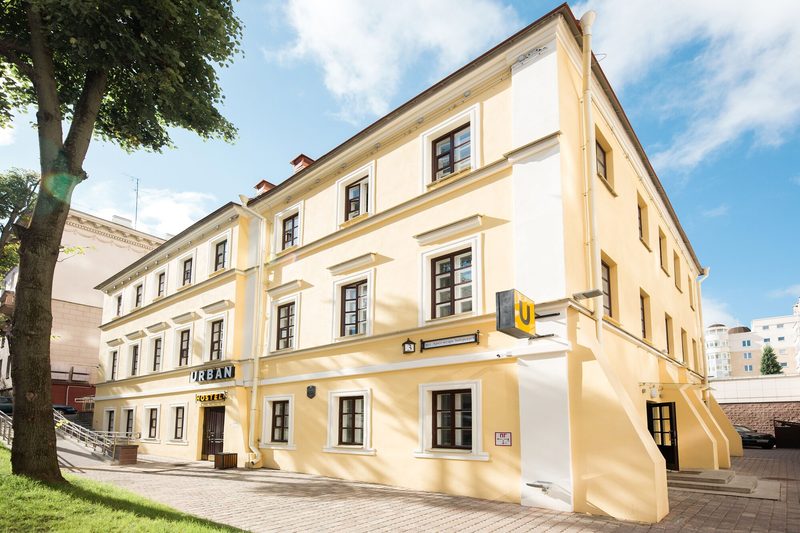
Where to Stay in Minsk in October
Hand-picked hotels across price tiers for October travellers.
Packing Checklist
Bookmark this page — your progress is saved between visits
Need the full list with shopping links?
Climate-specific gear, brand recommendations, and what to leave at home.
View Minsk Packing List →Essential Tips
Insider knowledge and common pitfalls to avoid
Insider Knowledge
Minsk's two-line metro is efficient transport and a gallery in its own right. Ploshchad Lenina and Ploshchad Peramogi stations feature Soviet-era mosaics and marble columns worth a dedicated stop. The system is simple enough. Two intersecting lines make getting lost nearly impossible. Signs are in Belarusian but the visual logic is clear. A single ride costs almost nothing by European standards. In October, the metro also is a warm-up station between outdoor walks when the damp cold gets into your joints.
Download offline Russian, not Belarusian, for your translation app. Despite the Belarusian-language signage that has expanded over the past decade, daily life in Minsk still runs in Russian. A handful of phrases open more doors than fluent English does. Spasibo for thanks. Skolko for how much. Gde for where. Most restaurants and shops outside the Upper Town respond better to the attempt. Market vendors at Komarovka will meet you halfway. The effort is noticed.
Minsk is one of the physically safest European capitals for walking around, day or night. Street crime remains remarkably low even in quiet residential areas after dark. The political environment is a separate consideration. Avoid photographing government and security buildings up close. Steer clear of any gatherings that look political. This is a controlled environment where certain topics carry weight. Carry your passport and any visa documentation at all times. Tourist interactions with authorities are typically straightforward if your papers are in order.
Stay on Independence Avenue between the train station and Ploshchad Peramogi. You will walk to nearly everything worth seeing. The metro's blue line runs directly underneath. Prefer atmosphere? The Upper Town near Zybitskaya Street works better. Evening strolls feel right there. The nightlife quarter sits closer too. October bookings rarely need more than two weeks lead time. Minsk has surplus rooms. Visitor numbers remain modest. Autumn availability is essentially unrestricted. Last-minute bookings often beat advance rates. Shop around.
Avoid These Mistakes
Dress for the felt temperature, not the thermometer. Minsk at 10°C (50°F) and 86% humidity bites deeper than dry continental air at the same reading. First-timers arrive in light jackets. They shiver through day one. Emergency layers come from GUM or the underground passages along Independence Avenue. Treat the felt temperature as 5°C (9°F) colder. Pack accordingly.
Do not attempt the full 15 km (9.3 miles) of Independence Avenue in one go. Architectural interest thins past Ploshchad Peramogi. October darkness falls by 5:30 PM. You will lose light before you finish the boulevard. Stick to the central 5 km (3.1 miles). Independence Square to Victory Square contains the densest Stalinist ensemble. Metro stations underneath provide easy exits. Leave when the cold wins.
English fails here more often than in Western Europe. The tourist quarter around Trinity Suburb and Zybitskaya Street has modernised. Step two blocks off Independence Avenue and Cyrillic dominates. Residential neighbourhoods and local cafeterias offer no translation. Metro announcements come in Belarusian. Market vendors speak Russian. Prague and Budapest built English infrastructure decades ago. Minsk has not. This absence makes the city interesting. Prepare with offline translation. Point and gesture when needed.
Ready to plan your trip to Minsk?
Now that you've got the research covered, here's where to go next.
Explore More Activities in Minsk