
Things to Do in Minsk in March
March weather, activities, events & insider tips
Low Season · Budget Friendly
March Weather in Minsk
Long-run averages for March
40°F (4°C)
High Temp
27°F (-2°C)
Low Temp
1.6 inches (41 mm)
Rainfall
74%
Humidity
9
Rainy Days
2
Sunny-Day UV
⚠ Daily freeze-thaw cycling creates hazardous ice patches on sidewalks and pedestrian crossings. Early morning and after sunset are worst. Melted daytime slush refreezes into transparent glaze. Boots with proper tread are essential. This is a safety requirement, not a style choice.
⚠ March occasionally delivers late-winter cold snaps. Temperatures drop to -10°C (14°F) or below for several consecutive days, well under the monthly average. Check the forecast for your specific travel week. Carry heavier insulation as a buffer. Pack smart.
Is March Right for You?
Weigh the advantages and considerations before booking
Advantages
- + March sits dead last on Minsk's tourist calendar. The grand Stalinist metro stations, the National Library's diamond-shaped observation deck, and the Museum of the Great Patriotic War feel unhurried and almost private. You can photograph the Gates of Minsk on Independence Avenue without a single tour group in your frame. The Upper Town's cobblestoned lanes belong to you and the locals.
- + Accommodation and dining costs drop to their annual floor in March. The city's long-established Belarusian restaurants, the Bolshoi Theatre's ballet and opera season, and the full museum circuit all operate at the same quality level as summer. Immediate availability. Rates that make Minsk one of the most affordable city breaks on the continent.
- + International Women's Day on March 8 transforms Minsk into one of the most sincerely festive cities in Eastern Europe. Every metro exit sprouts a flower vendor. The powdery-sweet scent of mimosa branches fills the underground passages. Restaurants pack with families celebrating. The city takes on a collective warmth that cuts straight through the cold.
- + Belarusian winter cuisine reaches its most satisfying form in March. Draniki sizzling on cast-iron plates with a crust that shatters under your fork. Machanka with its slow-braised pork swimming in thick smetana. Kolduny stuffed with wild mushrooms foraged the previous autumn. The cold outside makes every bowl of beet-red borscht feel designed for exactly this temperature.
Considerations
- − March in Minsk averages 4°C (40°F) by day and drops to -2°C (27°F) at night. Overcast gray skies on roughly two-thirds of the month. The psychological weight of persistent gray, monumental concrete architecture under concrete-colored skies, compounds over several days. By late afternoon the urge to find any warm interior becomes a priority rather than a preference.
- − The freeze-thaw cycle turns Minsk's sidewalks into a daily obstacle course. Overnight ice that refreezes into glass. Midday puddles of gray meltwater soaking through shoe seams. By evening a treacherous glaze on every uneven surface. The wide boulevards that look magnificent in photographs channel wind down Independence Avenue's 15 km (9.3 mile) corridor with nothing to break it.
- − Parks, river walks, and outdoor terraces that define summer Minsk are still locked in their winter state. Gorky Park's paths are muddy. The Svislach River embankment is windswept and barren. The trees lining the boulevards won't leaf out until mid-April at the earliest. Daylight stretches from about ten hours in early March to twelve by month's end. The low-angled sun barely clears the rooftops of the Stalinist buildings.
Best Activities in March
Top things to do during your visit
Soviet Architecture and Underground Metro Tours
Minsk's Independence Avenue stretches 15 km (9.3 miles) through the city center, lined with monumental Stalinist buildings rebuilt after the war at a scale that has no real parallel in Europe. March's bare trees strip away the foliage that softens these facades in summer. You see the full weight of the architecture. The colonnades. The socialist realist reliefs. The sheer vertical mass of stone against the flat Belarusian horizon. Below ground, the metro stations are equally theatrical. Ploshchad Lenina's marble halls echo when half-empty in March. Ploshchad Yakuba Kolasa's mosaics glow under fluorescent light like something between a cathedral and a Cold War bunker. You feel the bite of wind funneling between the buildings above, then drop underground into warm, quiet stations. That contrast alone is worth experiencing. March's empty sidewalks and thin crowds mean you can stop in the middle of the avenue, look up, and absorb the reconstruction ambition without being jostled.
Booking Tip: Book at least a week ahead through licensed guides who specialize in Soviet architectural history. March's low season means flexible scheduling. Small group sizes of two to four people are the norm. Look for tours that cover both the above-ground avenue and at least three metro stations. The stations are the part most independent visitors miss entirely. See current guided options in the booking section below.
Mir Castle and Nesvizh Palace Day Excursions
Two UNESCO World Heritage sites sit within 120 km (75 miles) southwest of Minsk, close enough for a single day trip that covers both. Mir Castle, a 16th-century Gothic-Renaissance fortress with rust-red brickwork and corner towers, looks its most dramatic in March. Patches of snow still cling to the grounds. The castle reflects in the half-frozen pond with a sharpness that summer's lush green blurs. The interior rooms are heated, filled with period furniture, weaponry displays, and a portrait gallery tracing the Radziwill dynasty through centuries. Nesvizh Palace, another 30 km (19 miles) further along, is grander in scale. A large Baroque residence surrounded by landscaped parks that in March have the stark, stripped-down grace of a charcoal sketch. You will likely share both sites with a handful of Belarusian school groups and almost no international visitors. Unhurried access to chapels, underground passages, and tower lookouts. In summer these require patience and elbows.
Booking Tip: Book a combined day trip at least five days ahead. Look for operators who provide heated transport and allow at least two hours at each site. Anything shorter rushes you through the interiors. The drive from Minsk takes roughly ninety minutes each way on the M1 highway. An early departure around 8 AM makes for a comfortable return by evening. Current tour options are in the booking section below.
Traditional Belarusian Banya Sessions
The banya hits hardest when the air outside bites. March in Minsk delivers exactly that. The ritual runs in rounds. You heat in a steam room where water hurled onto hot stones sends a wall of birch or eucalyptus vapor so thick your lungs feel heavy. Then you step outside or plunge into cold water. The shock resets something deep in your nervous system. The venik, a bundle of dried birch leaves soaked in hot water and slapped rhythmically across your back, sounds punishing. It feels closer to deep-tissue massage crossed with aromatherapy. The wet birch releases a green, sappy scent with each strike. Minsk has several public and private banya facilities. They range from basic Soviet-era neighborhood houses with cracked tile and honest heat to more modern wellness-oriented spaces. March's cold amplifies the contrast that makes the whole experience work. Stepping outside between rounds into -2°C (27°F) air after 80°C (176°F) steam is the kind of physical reset that stays with you for days.
Booking Tip: Private banya sessions fill up on Friday and Saturday evenings. Reserve midweek or during daytime for the best availability. Some facilities require booking at least two days ahead. Look for establishments that offer the full traditional experience. You want veniks, tea service between rounds, and a rest area. The bare-bones steam-only option misses the point. Check the booking section below for guided banya experiences that include cultural context.
Great Patriotic War Museum and Minsk Cultural Circuit
Minsk lost a quarter of its population during World War II. It was rebuilt almost entirely from rubble. This history makes the Museum of the Great Patriotic War more than a collection of uniforms and rifles. The museum sits in a striking modern building near the Svislach River. It contains ten themed halls. You walk through reconstructed trenches, a partisan forest camp, and the defense of Brest Fortress with immersive detail that borders on overwhelming. The sound design alone justifies the visit. Artillery thuds vibrate through the floor. Radio transmissions crackle from hidden speakers. From there, the National Art Museum is a fifteen-minute walk along the river. Its Belarusian collection spans icons from the 12th century to Soviet-era avant-garde work that most Western galleries have never exhibited. March's gray skies make this kind of indoor immersion feel right. It is not a rain-day fallback. It is the way to spend the day. The Bolshoi Theatre of Belarus, a ten-minute walk further, runs its full ballet and opera season through March. Seats that would sell out months ahead in Moscow or St. Petersburg are often available here within a week.
Booking Tip: The museum and galleries are walk-in visits. For the Bolshoi Theatre, check the program and book at least a week ahead for popular productions. Guided museum tours add significant depth. The exhibits are labeled in Belarusian and Russian. English-language context transforms the experience from a visual walkthrough to something you carry with you. See guided tour options in the booking section below.
Upper Town and Trinity Hill Evening Exploration
Minsk's Upper Town and the adjacent Trinity Hill quarter along the Svislach River form the only pocket of the city that evokes pre-war architecture. In March's early-darkening evenings they take on a quality that summer's long twilight never allows. Gas-style lamps along Trinity Hill's cobblestoned lanes switch on by 5 PM in early March. They cast warm pools of amber light across pastel-painted 19th-century facades. The smell of woodsmoke drifting from nearby restaurants mixes with the cold river air. The result feels closer to a Galician town than the Soviet capital you walked through an hour earlier. The Town Hall on Freedom Square anchors the Upper Town. The Holy Spirit Cathedral, white-and-aquamarine Baroque that glows under floodlights against the dark sky, is the most photographed building in Minsk. The reason becomes obvious at dusk. Zybitskaya Street, running through the heart of this district, is where Minsk's nightlife concentrates. It is a dense stretch of bars, live-music venues, and late-night restaurants that fills from Thursday through Saturday. In March the crowds are almost entirely local. The atmosphere is relaxed. The transition from frozen-nosed walking to a warm basement bar serving local craft beer happens naturally and gratefully.
Booking Tip: This is best experienced as a self-guided evening walk. Start around 4 PM as daylight fades and the street lighting takes over. If you want historical context for the Upper Town's architecture, book a daytime walking tour. Extend into the evening independently. For the nightlife along Zybitskaya Street, no reservations are needed in March. Walk in. Find a seat. Settle in the way locals do. See walking tour options in the booking section below.
Where to Stay in Minsk in March
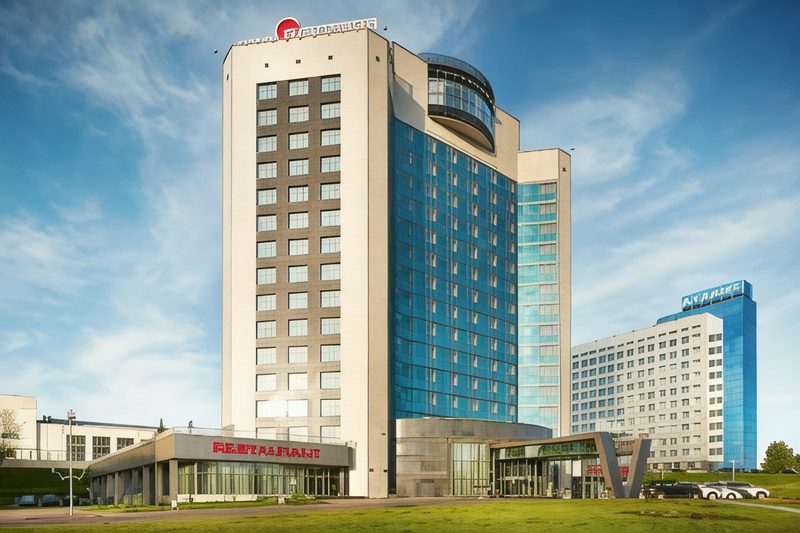
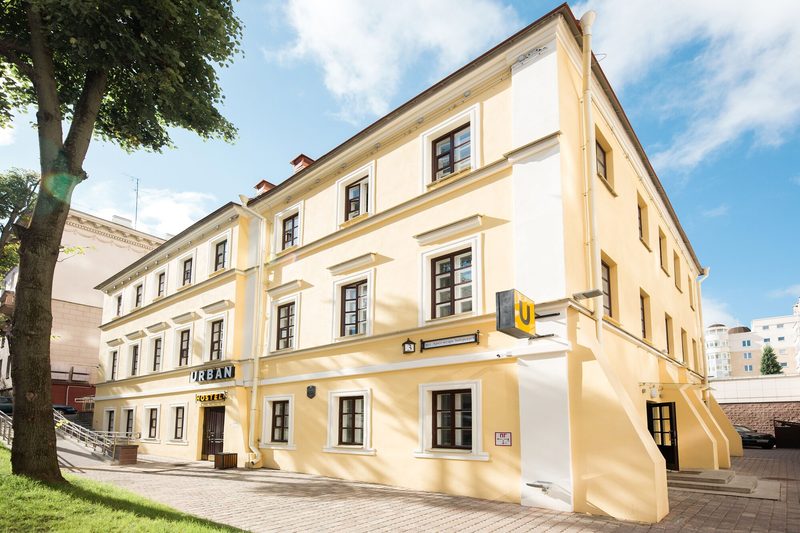
Hand-picked hotels across price tiers for March travellers.
Public Holidays in March
Dates that affect opening hours, transport and crowds
Мiжнародны жаночы дзень
Known in English as International Women's Day. Observed nationwide as a public holiday.
Мiжнародны жаночы дзень
Known in English as International Women's Day. Observed nationwide as a public holiday.
Packing Checklist
Bookmark this page — your progress is saved between visits
Need the full list with shopping links?
Climate-specific gear, brand recommendations, and what to leave at home.
View Minsk Packing List →Essential Tips
Insider knowledge and common pitfalls to avoid
Insider Knowledge
Ride Minsk's metro even without a destination. Stations were built as underground palaces. Ploshchad Lenina displays marble colonnades. Ploshchad Yakuba Kolasa shows ceiling mosaics. Nyamiha features arched vaults. These rank among the most ornate in the former USSR. A single fare covers the full system. March brings lighter ridership. Stop on platforms and look up. No one blocks your view.
Serious Belarusian food concentrates in long-running restaurants. Find them near the Upper Town. Check side streets off Independence Avenue. Skip the international-leaning places with English menus. Look for menus leading with draniki, machanka, and kolduny. Pizza and sushi signal the wrong spot. The potato-heavy cuisine runs denser than Western visitors expect. Pace yourself. Properly made machanka delivers unmatched depth. Slow-braised pork sits under a thick cap of smetana. You have eaten nothing like it elsewhere.
Minsk ranks exceptionally safe by European standards. Street crime stays low. Petty theft and violent incidents sit among the continent's lowest. Walking alone at night feels secure. Central neighborhoods surprise visitors with preconceptions. The practical cautions differ. Avoid political demonstrations. Keep registration documents current in private accommodation. Photographing certain government buildings is restricted. The visa-free entry regime permits many nationalities to arrive at Minsk National Airport. Stays reach up to 30 days. Eligible nationalities and conditions shift over the years. The regime applies only to airport arrivals. Overland crossings do not qualify.
Zybitskaya Street in the Upper Town hosts Minsk's nightlife. It is more developed than first-time visitors expect. A dense row of bars lines the street. Live-music venues and late-night restaurants fill Thursday through Saturday. March crowds stay almost entirely local. Music leans toward live acts. DJs mix Russian and international sets. The atmosphere welcomes visitors. It catches them off guard. The craft beer scene has grown sharply. Local breweries produce styles rivaling anything from the Baltics.
Avoid These Mistakes
Do not pack for 4°C (40°F) as a mild autumn day. Wind, dampness, and Soviet-scale distances between attractions bite harder. March feels significantly colder than thermometers read. Visitors in light jackets and fashion sneakers suffer. Their first afternoon becomes a hunt for warmer gear. Central shop options run limited. Prices exceed what home packing would have cost.
English alone will not carry you far here. Younger Belarusians in hotels and restaurants increasingly speak some English, but menus, signage, metro maps, and museum labels remain primarily in Belarusian and Russian. Outside the Upper Town tourist pocket, translation apps and pointing become your primary tools. Learn the Cyrillic alphabet before arrival. A few hours of practice makes street signs, metro stations, and restaurant menus navigable rather than opaque.
Minsk was rebuilt at a scale designed for parades, not pedestrians. What looks like a short walk on the map between October Square and the National Library is 4.5 km (2.8 miles) along wind-exposed avenues with limited shelter. Use the metro for anything beyond two stops. Save your walking energy. The Upper Town and Trinity Hill district reward foot exploration. Distances there are human-scaled.
Ready to plan your trip to Minsk?
Now that you've got the research covered, here's where to go next.
Explore More Activities in Minsk