
Things to Do in Minsk in November
November weather, activities, events & insider tips
Low Season · Budget Friendly
November Weather in Minsk
Long-run averages for November
38°F (3°C)
High Temp
31°F (0°C)
Low Temp
1.9 inches (48 mm)
Rainfall
89%
Humidity
10
Rainy Days
1
Sunny-Day UV
⚠ Freezing drizzle and black ice become increasingly common in the second half of November as temperatures hover right at the freezing point. Sidewalks, along the Svislach River embankments and in parks, can ice over without visible warning. Walk in insulated boots with proper grip. Avoid rushing on paved slopes.
⚠ Dense fog occurs on roughly a third of November mornings due to the high humidity and temperature inversions over the flat terrain around Minsk. Visibility can drop below 200 m (656 ft), affecting road travel to sites like Mir Castle and Nesvizh Palace. If booking a day trip, confirm that your operator adjusts departure times for fog conditions rather than driving through them.
Is November Right for You?
Weigh the advantages and considerations before booking
Advantages
- + November puts Minsk at dead low season. The city's grand Soviet-era museums, the National Opera and Ballet Theatre, and the galleries along Independence Avenue sit empty of summer tour groups. You can stand alone in the rotunda of the Belarusian National Arts Museum. The silence between the paintings is audible.
- + Accommodation rates drop considerably from the already-moderate Belarusian baseline. November falls well outside the June-through-September window. Business conferences and summer festivals push demand up then. Last-minute bookings become realistic rather than reckless now.
- + Minsk's indoor cultural calendar fires on all cylinders this month. The Listapad International Film Festival fills the city's cinemas with premieres and retrospectives. The Opera and Ballet Theatre runs a heavy rotation of classical performances. Its interior rivals any in Eastern Europe: cream-and-gold baroque, red velvet seats worn smooth by decades of use.
- + The Belarusian kitchen is built for exactly this weather. November is draniki season in earnest. Those thick, crispy potato pancakes come with sour cream and sometimes with a pot of machanka, the pork-and-mushroom stew that smells like woodsmoke and caraway. The cold outside gives the heavy, warming food a purpose it simply lacks in July.
Considerations
- − Daylight is brutally short. By mid-November, the sun sets before 5 PM. It does not rise until after 8 AM. That leaves roughly eight usable hours of grey, flat light. Outdoor photography suffers. The psychological weight of the darkness is real. If you're sensitive to seasonal gloom, November in Minsk will test you.
- − The 89% average humidity at near-freezing temperatures creates a penetrating damp cold. It feels harsher than the thermometer suggests. A dry minus-five in Moscow feels warmer than Minsk's zero-degree fog. Your bones know the difference within an hour of walking along the Svislach River embankment.
- − Several outdoor attractions lose their appeal or close entirely. Loshitsa Park's famous apple orchards stand bare and muddy. They were gorgeous in spring bloom. Boat excursions on the Svislach shut down for the season. The city turns decisively inward. If you came for green spaces and riverwalks, you'll find them cold, brown, and largely deserted.
Best Activities in November
Top things to do during your visit
Independence Avenue Soviet Architecture Walk
Minsk's central spine, Independence Avenue, runs roughly 15 km (9.3 miles) from Independence Square to the northeastern suburbs. November's bare trees and low cloud sharpen the Stalinist neoclassical facades. Summer foliage obscures them. The boulevard was rebuilt almost entirely after World War II. Minsk lost 80% of its buildings. The resulting uniformity of scale is unlike anything in Western Europe. Block after block of symmetrical limestone frontages, monumental arches, and hammer-and-sickle reliefs remain untouched. The cold keeps the sidewalks quiet. You can hear your own footsteps echo off the facades. Start at the KGB building on Independence Avenue. It is still operational. It remains unmarked except for the bust of Dzerzhinsky. Walk northeast toward Victory Square, where the eternal flame burns in the granite obelisk. The whole stretch takes roughly two and a half hours at a contemplative pace. Stepping into the warm marble corridors of the metro stations along the way doubles as both a warming break and an architectural experience. Stations like Ploshchad Lenina feature Soviet mosaics that rival any gallery wall.
Booking Tip: Self-guided walking works well here. Licensed city tour operators add historical context. They transform the architecture from impressive to moving. Book two to three days ahead through the booking widget below for guided options. Morning starts around 10 AM catch the best of the limited daylight.
Mir Castle and Nesvizh Palace Day Excursion
Two UNESCO World Heritage Sites sit within a 100 km (62 mile) radius of Minsk. November is arguably the most atmospheric month to visit both. Mir Castle, a 16th-century fortress with rust-red brick towers rising above a frozen or half-frozen moat, looks like it belongs in a Tarkovsky film under November's pewter sky. The interior rooms hold Renaissance-era tapestries and armour displays. They are candlelit in the shorter months. They smell of old timber and stone. They feel less like museum exhibits and more like a house someone powerful just stepped out of. Nesvizh Palace, about 30 km (18.6 miles) further, sprawls across landscaped grounds. The last brown leaves cling to oaks planted three centuries ago. The ballrooms still carry the faint chill of unheated grandeur. Both sites see a fraction of their summer visitors in November. You can linger in rooms that July crowds push you through in minutes. The drive through the Belarusian countryside is its own kind of austere beauty: flat, open, scattered birch forests with their white bark standing stark against grey fields.
Booking Tip: Guided day tours handle transport and ticketing in one package. They typically depart early morning, returning by late afternoon. Book at least a week ahead through the booking widget below. November departures run less frequently than summer. Dress for outdoor exposure between the car park and entrances. Wind across those open plains cuts sharply.
Belarusian Banya Experience
November is peak banya season in Minsk, and for good reason. The contrast between the frozen air outside and the birch-scented steam inside is the entire point. A proper Belarusian banya session involves cycling between a wood-fired steam room heated well above 80°C (176°F), a plunge pool cold enough to make you gasp, and a rest area where you drink black tea with honey and feel your heartbeat slowly return to normal. The birch venik, a bundle of dried birch branches soaked in hot water, then slapped rhythmically across your back and legs, sounds brutal and feels extraordinary, releasing a sharp green fragrance that fills the steam. Banya culture in Minsk runs deep. Locals treat it as weekly routine rather than luxury, and the communal aspect, strangers sharing steam, trading tips on venik technique, arguing about optimal temperature, is as much the experience as the heat itself. Your skin afterward feels like it belongs to someone ten years younger. Stepping out into Minsk's damp November night air, still radiating warmth, is one of those physical pleasures no photograph captures.
Booking Tip: Traditional public banyas in Minsk operate on a walk-in basis, but guided banya experiences that include instruction on etiquette and venik technique can be booked through the widget below. Weekend afternoons tend to be busiest. Weekday mornings offer a quieter, more local-feeling session. Bring flip-flops and a towel, or rent them on-site.
Komarovsky Market Food Tour
Kamarouski Rynak, Komarovsky Market, is Minsk's central covered market, and in November it takes on a particular character. The outdoor stalls pack up or thin out, concentrating everything under the Soviet-era hall's high ceilings where the air smells of smoked salo, fresh dill, pickled garlic, and the yeasty sweetness of black bread. The dairy counter alone could occupy half an hour. Tvarog (farmer's cheese) sold in damp white blocks, smetana so thick the spoon stands upright, and kefir that tastes sharper and more alive than anything bottled. November is also when the preserved goods peak: jars of pickled mushrooms foraged from Belarusian forests in September, fermented cabbage in shades from pale gold to deep pink, and smoked kolbasa sausages hanging in heavy loops. The market ladies, bundled in wool despite the indoor warmth, will offer tastes if you show genuine interest and attempt even broken Russian or Belarusian. Around the market's perimeter, small canteen-style eateries serve bowls of borscht, proper beet-red borscht, not the diluted tourist version, with a hunk of rye bread and a fat spoonful of smetana that melts into the hot broth like a slow cloud dissolving.
Booking Tip: Food-focused walking tours that include Komarovsky Market as a centerpiece can be booked through the widget below, and they're worth it for the context a local guide provides. Knowing which stalls have been family-run for decades versus which are recent arrivals changes the experience entirely. Book three to five days ahead. Morning visits before noon catch the freshest selection and the most animated atmosphere.
National Opera and Ballet Theatre Performance
The Belarusian National Opera and Ballet Theatre sits in Trinity Hill park in a building that looks like a white neoclassical temple from outside and feels like stepping into 1950s Moscow inside. Chandeliers the size of small cars, a ceiling painted with socialist-realist allegories of art and labour, and acoustics that carry a mezzo-soprano's voice to the back row without amplification. November falls squarely in the main performance season, and the company's ballet troupe, still trained in the rigorous Soviet school that produced some of the twentieth century's finest dancers, performs Swan Lake, Giselle, and contemporary works to audiences that dress up properly. This is not a jeans-and-sneakers crowd. The ticket hall smells of perfume and damp wool coats in November, and during intermission the lobby fills with the clink of champagne flutes and low conversation in Russian and Belarusian. Even if ballet is not typically your thing, the combination of the architecture, the formality, and the calibre of the dancing makes this one of Minsk's most transporting evenings. Performances typically start at 7 PM. The surrounding park, lit by old-fashioned lampposts, is worth a short walk beforehand despite the cold.
Booking Tip: Popular performances sell out two to three weeks ahead, so book early through the venue's box office or check the booking widget below for package options that include interval refreshments or backstage elements. Weeknight performances tend to have better seat availability than weekend shows. Dress smartly. Minsk audiences still observe theatre-going formality.
Belarusian Great Patriotic War Museum Visit
The Museum of the History of the Great Patriotic War, relocated to its striking modern building near the Svislach River in 2014, is one of the most powerful war museums in the former Soviet Union, and November's sombre mood suits it. Belarus lost a quarter of its population in World War II, a fact that is abstract until you walk through ten halls of artefacts, photographs, and reconstructed partisan camps and feel the weight of it settle on your chest. The museum's centrepiece, a glass dome over a sculpture garden called the Victory Hall, lets in whatever grey November light there is, casting long shadows across the marble. The partisan warfare exhibits are striking. Homemade weapons, hand-drawn maps of forest supply routes, photographs of teenage fighters who look like they should be in school. Allow at least three hours. Most visitors underestimate how absorbing the collection is. The cold walk along the river from the metro station to the museum entrance, past bare trees and the distant silhouette of the National Library's diamond-shaped tower, is an unintentional but effective transition into the museum's gravity.
Booking Tip: General admission is available at the door. Guided tours in English should be arranged in advance through the booking widget below or directly with licensed operators. English-speaking guides are limited in number. November's shorter schedule may reduce walk-in availability. Weekday mornings are quietest. Photography is permitted in most halls.
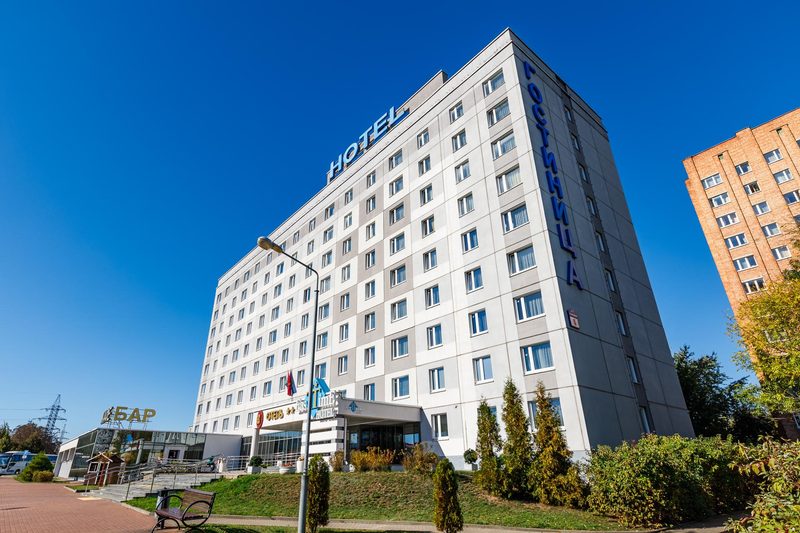
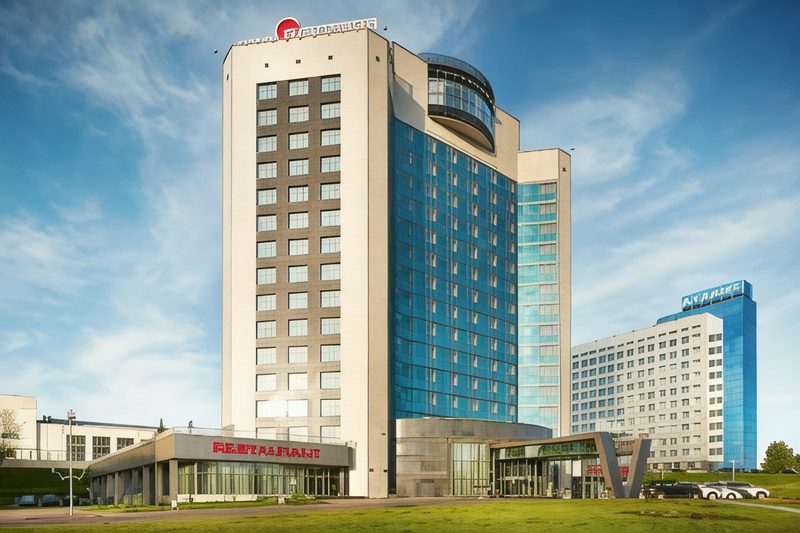
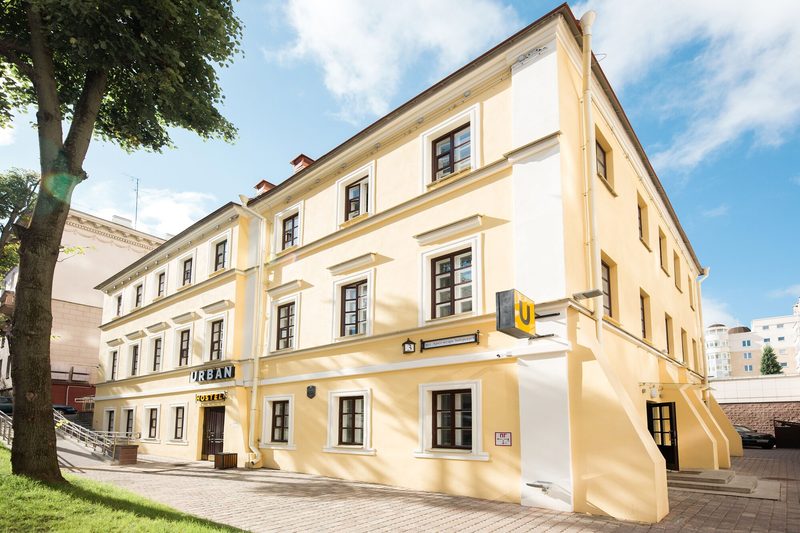
Where to Stay in Minsk in November
Hand-picked hotels across price tiers for November travellers.
Public Holidays in November
Dates that affect opening hours, transport and crowds
Дзень Кастрычніцкай рэвалюцыі
Known in English as October Revolution Day. Observed nationwide as a public holiday.
Дзень Кастрычніцкай рэвалюцыі
Known in English as October Revolution Day. Observed nationwide as a public holiday.
Дзень Кастрычніцкай рэвалюцыі
Known in English as October Revolution Day. Observed nationwide as a public holiday.
Packing Checklist
Bookmark this page — your progress is saved between visits
Need the full list with shopping links?
Climate-specific gear, brand recommendations, and what to leave at home.
View Minsk Packing List →Essential Tips
Insider knowledge and common pitfalls to avoid
Insider Knowledge
The Minsk metro is not just transport. It is a functioning Soviet architectural gallery. The two lines, Moskovskaya and Avtozavodskaya, contain stations with marble walls, bronze reliefs, and mosaic ceilings that were designed to make underground travel feel palatial. November crowds are thin enough that you can stop and look at the artwork without blocking commuter flow. Ride the full length of Line 1 from Malinauka to Uruchcha during off-peak hours. Treat each station as a gallery room.
Belarusians eat their main meal at lunch, not dinner. November is when this habit pays off for visitors. Most of the stolovaya-style canteens, Soviet-era cafeteria restaurants with trays and steam tables, serve their heaviest, best food between noon and 2 PM: thick soups, braised meats, potato dishes still bubbling from the oven. By 7 PM these places are winding down or closed. The sit-down restaurants aimed at evening diners tend to charge considerably more for comparable food. Follow the local rhythm. Eat big at midday.
If you're visiting Minsk in the first week of November, be aware that some government offices, banks, and smaller shops close or run shortened hours around November 7. This rarely affects major tourist sites. If you need to handle any administrative business, currency exchange at a bank rather than an ATM, SIM card registration, or transit card purchases at specific offices, plan to do it before or well after the holiday.
The Trinity Suburb district along the Svislach River, Minsk's reconstructed 'old quarter,' looks best in the early November dusk around 4 to 4:30 PM, when the streetlamps come on while a trace of blue still lingers in the sky. The pastel-painted facades, peach, pale green, cream, reflect the lamplight against the darkening river in a way that disappears entirely by full dark. Most visitors photograph it in daylight. They miss the fifteen-minute window that makes the place come alive.
Avoid These Mistakes
Underestimating how early darkness falls and cramming outdoor sightseeing into the afternoon. By 4 PM the light is already failing, and by 4:45 it is functionally night. Minsk's best exteriors, the Stalinist facades on Independence Avenue, the Island of Tears memorial on the Svislach, the National Library's diamond tower, need to be seen before 3 PM for decent light. Reverse your instincts. Sightsee in the morning, museum and cafe in the afternoon.
Dressing for the temperature reading rather than the humidity. Visitors from drier cold climates, Moscow, Scandinavia, the American Midwest, routinely arrive in November thinking 0°C (32°F) is manageable in a light jacket. Minsk's 89% humidity drives the wind chill perception well below the actual temperature, and the damp seeps through layers that would be adequate in dry cold. Locals layer aggressively and change into indoor clothes at work. Do the same.
Assuming English is widely spoken outside the main tourist circuit. Minsk's service industry is improving. But once you step beyond the international-facing restaurants and major museums, Russian (and occasionally Belarusian) is the operating language. A few key phrases, 'spasiba' for thank you, 'skolka stoit' for how much, 'gdye' for where, go surprisingly far, and locals respond warmly to any attempt. Download an offline translation app before you arrive. Mobile data coverage is good but translation apps need their dictionaries cached.
Ready to plan your trip to Minsk?
Now that you've got the research covered, here's where to go next.
Explore More Activities in Minsk